The Evidence Behind the Sentence: Delroy A. Whyte-Hall on Real Estate Communication
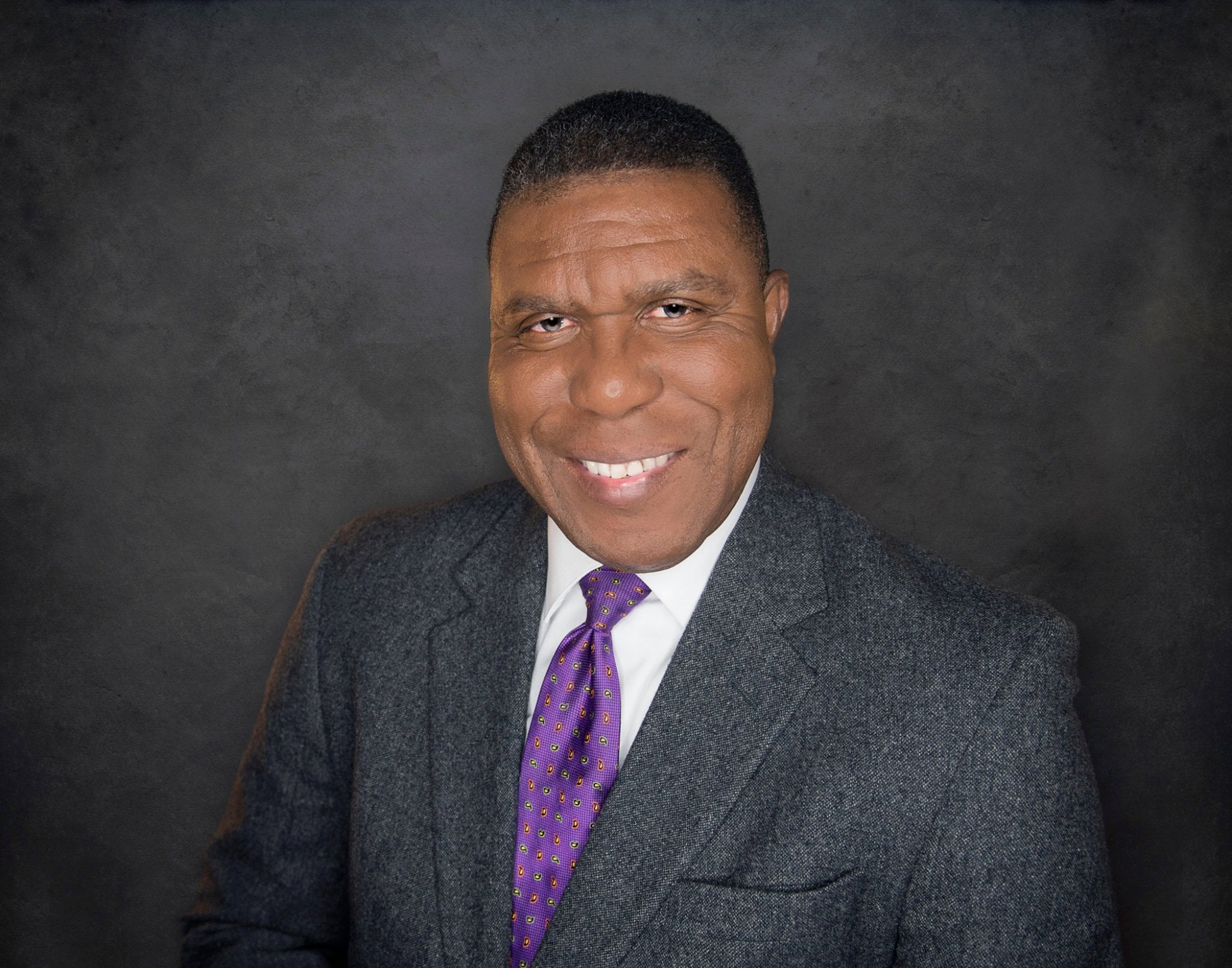
Photo: Monika Wertman / Wertman Studios
INAUGURAL PRACTICE PROFILE
The Evidence Behind the Sentence: Delroy A. Whyte-Hall on Real Estate Communication
Delroy A. Whyte-Hall, a Caribbean journalist and founder of Whyte-Hall Communications Network, a real estate communications practice, has worked across military service, journalism, public relations, corporate and nonprofit communications, and business writing. His present work focuses on a question that developed gradually across those roles: not simply whether communication is accurate, but whether the conclusion it leaves with the reader is justified by the evidence. In this inaugural Practice Profile feature, Whyte-Hall explains why that distinction has become central to the way he examines real estate communication.
Disclosure: This inaugural Practice Profile features Whyte-Hall Communications Network founder Delroy A. Whyte-Hall and was produced as the launch profile for the Practice Profiles service. No participant fee was charged. Whyte-Hall supplied the source information and reviewed the profile before publication. The profile was edited and checked under WHCOMN's Practice Profiles editorial and verification standards. |
How did you come into your present area of communications work, and what experiences most shaped the way you practice today?
I did not arrive at real estate communication through one straight line. My working life has moved through military service, journalism, public relations, corporate communication, nonprofit communication and business writing. I worked in newsrooms including The Gleaner, The Sunday Herald, The Star, the Turks & Caicos News, and the Jamaica Observer, where I was among the founding senior reporters, and later in communications environments that included Sandals Resorts International, Food For The Poor Jamaica, and Jamaica’s Ministry of Tourism, where I worked primarily in a freelance capacity.
Military intelligence and journalism probably gave me the strongest foundation. Both taught me not to accept the first version of a story simply because someone presented it as fact. You verify it. You ask what is missing. You separate what someone claims from what the evidence actually establishes, and you keep the reader’s needs in mind rather than simply repeating what the source wants to say.
Public relations added another lesson. An organization may have legitimate reasons for presenting its side of something, but credibility cannot be separated from how the information is framed. Something can be technically accurate and still create an impression that goes farther than the evidence permits.
My present work brings those experiences together. I look at real estate communication as both a writer and an investigator. I am interested in the words, but I am even more interested in what those words cause somebody to understand.
When you begin examining communication for a real estate professional or organization, what do you try to understand first?
The first thing I want to know is what the communication is supposed to accomplish and who has to understand it.
I do not begin by asking how I can make the writing sound better. I want to know what the reader needs to understand, what the real estate professional is trying to communicate, what facts support it and whether there is a gap between those things.
Then I look at it through the reader’s eyes. What can the buyer, seller, client, journalist or member of the public actually conclude from what is on the page? What are they being required to figure out for themselves? What might they reasonably misunderstand?
Sometimes the problem is the writing. Sometimes information is missing. Sometimes the facts are present but have not been connected to the decision the reader has to make. And sometimes the communication is simply trying to make a stronger claim than the evidence supports.
What problem do you encounter repeatedly in real estate communication?
One of the biggest is the assumption that providing information is the same as communicating.
The agent may know exactly what a sentence means because the agent already knows the property, transaction or market. The reader does not have the luxury of that background. Therefore, my working principle has become: information is what the writer knows; communication is what the reader understands.
That distinction shows up everywhere. A listing, for example, gives features without explaining why they matter. A market update provides statistics without explaining what they do or do not mean for a particular household. A biography or profile says an agent is “experienced,” “knowledgeable” or “dedicated” without showing how that experience affects the way the agent works.
Basically, I try to reduce the amount of work the reader has to do. Simply give the fact, give the context, explain its significance and state the limitation where one exists. For argument’s sake, if something still needs to be verified, I would certainly make that uncertainty visible instead of disguising it as certainty.
What have you learned about communicating when the evidence is incomplete or open to different interpretations?
I have learned that uncertainty should be made visible, not written around. People, I find, sometimes believe strong communication means sounding certain. However, it is my thinking that responsible communication means being precise about what is known, what is not known and what somebody should verify before acting.
And that’s something I find matters, especially in real estate, because somebody may be making a very expensive decision. And here’s what I am driving at: More inventory may improve a buyer’s choices, but it does not automatically mean the buyer can afford the complete monthly cost of a particular property. A price reduction tells you something about the asking price, but it does not resolve repair issues, insurance costs, taxes, assessments or other factors that may materially change the decision.
As a result, I increasingly use three questions in my practice, and they are:
- What does this fact change?
- What does it not solve?
- What should the person verify next?
Good communication does not eliminate every uncertainty, but it certainly does make the uncertainty locatable.
What do you do differently now than you did earlier in your career?
First, I pay much more attention now to the total impression a piece of communication creates. Earlier in my career, I was forced to concentrate heavily on whether the facts were accurate, whether the language was clear, and whether the document was properly constructed. I still care about all of that today. But experience has made me more interested in the next question: What does the reader walk away believing?
That does not mean a collection of individually accurate statements cannot still produce an unjustified conclusion. A real estate agency or firm, for example, can report that 300 agents signed up for a new technology platform or training program and allow that number to imply a level of success the figure itself does not establish.
I am also less interested in polished language for its own sake. My approach is to revise heavily, but revision for me is not decoration. What I am looking for is accuracy, assumptions, missing context, weak transitions, unsupported claims, and places where the reader has been asked to make a leap of faith.
In this regard, experience has made me slower to accept a sentence simply because the sentence sounds good.
Can you give an example of a small communication problem that changed the way you think about trust?
One ordinary example involved an open-house announcement, where I encountered two different times for the same event: one said 5:00 to 7:00 and another said 6:00 to 7:00.
Technically, it was a small mistake. But from the public’s side, it creates some unintended questions. Which time is correct? If I arrive at 5:15, will anybody be there? Was something changed? Which source am I supposed to trust?
And I want to emphasize here that nobody has to make an outrageous false statement for trust to weaken. Sometimes trust is lost through small inconsistencies that force the reader to decide which version of the professional’s own information to believe.
That also reinforced something I pay close attention to now: credibility is cumulative. The details some agents, brokers, and agency owners may regard as minor could be the only evidence an outsider has when deciding how carefully that professional handles information.
What part of your work at Whyte-Hall Communications Network do people often not see?
That’s probably the amount of thinking that happens before I change a sentence or paragraph. Consider this: people usually see the finished article, profile, listing description, press release, or communication review. What they do not necessarily see is the investigation that goes into producing the finished copy.
That investigation means comparing claims with evidence, looking for contradictions, asking whether a number proves what somebody says it proves, and examining whether the reader can clearly distinguish fact from interpretation. At the same time, I am thinking about the questions the communication may unintentionally create.
That is where restraint becomes important. Professional communication is not simply about finding the strongest possible way to say something. Sometimes my job is to weaken a sentence because the evidence does not justify the stronger version.
The finished writing may therefore look simple. Often, it looks simple precisely because somebody did the difficult work before the reader ever saw it.
Why did real estate communication become the principal focus of your work?
It happened gradually. Over the years, I received a steady stream of emails, letters, newsletters, and even phone calls from agents interested in buying my house or a piece of land my wife and I own in Florida. Some of the communication was poor. In other cases, if you removed the agent’s name, it was difficult to tell one message from another. Too much of it sounded as though it came from the same template.
The more I examined real estate communication, the more I saw an industry where communication carries unusual weight because the transactions are expensive, emotional, and complicated, yet much of the public-facing material is treated mainly as marketing.
I also kept seeing experienced agents whose communication did not reflect the quality of their judgment. Bios described agents as knowledgeable, trusted, or client-focused without showing how they actually worked. Market updates reported numbers without explaining what those numbers meant for a buyer or seller. Visibility was often treated as though it were the same as credibility.
One conversation brought the issue into sharper focus. A woman who was looking for a home with her husband told me she was having difficulty distinguishing among agents because so much of their marketing sounded the same. That confirmed something I had already begun to see.
What was often missing was evidence of professional value. If an agent is particularly good at preparing sellers, recognizing problems early, negotiating difficult situations, or helping buyers make disciplined decisions, I want the communication to show that. Do not merely tell me the person is an expert. Let me see how the expertise operates.
That became more interesting to me than simply producing more marketing copy.
“What is this communication causing people to believe, trust, question or overlook?” How did that question develop?
It developed as I began looking beyond what a piece of communication literally said and paying more attention to the impression it left behind.
Someone might reasonably say, “But everything here is true.” My next question became: yes, but what conclusion is the reader being encouraged to draw from those true statements?
A recent example involved a real estate technology company announcing that approximately 300 agents had joined its AI platform in seven weeks. That was a legitimate number. It established interest and adoption.
But it did not establish that those agents were getting results, remained active, generated leads, gained clients, or closed transactions. Those conclusions would require different evidence.
Nothing in the original statement had to be false for the communication to create an impression larger than the evidence supported.
That distinction became central to how I work. I am not only asking whether a statement is factually defensible; I am also asking whether the belief it is likely to leave with the reader is defensible too.
Conclusion
For Whyte-Hall, the thread running through his work is not simply a concern with better writing, but with better judgment. His experience across military intelligence, journalism, public relations and business communication has made him increasingly attentive to the gap between what a statement literally says and what a reader is likely to believe because of it. In real estate, where people are often making expensive, emotional and consequential decisions, he sees that distinction as especially important. The work, as he describes it, is therefore not to make communication sound stronger than the evidence allows, but to make the evidence, its meaning and its limitations easier to see. That is the standard he now brings to every sentence: not only whether it is accurate, but whether the impression it leaves behind is one the facts can responsibly support.
_______________________________________________________________________________________
Whyte-Hall Communications Network | Practice Profiles
About Practice Profiles
Practice Profiles is a Whyte-Hall Communications Network series examining how real estate professionals—including agents, brokers, managing brokers, team leaders, and others directly engaged in real estate practice—approach their work. Participants may work in residential, commercial, luxury, relocation, investment, condominium, land, new construction, or other specialized areas of real estate practice. Each profile is developed from participant-supplied experience and responses, supported by research, editorial questioning, professional editing, verification where required, and participant review. The aim is to move beyond promotional claims and give readers a clearer understanding of the judgment, methods, experiences, and working practices behind the professional’s public profile.
Photo credit: Monika Wertman / Wertman Studios
© 2026 Whyte-Hall Communications Network. All rights reserved.